

Updated August 10, 2026. Educational information only — not legal advice. Verify current requirements at oag.ca.gov and with your dealer before any transaction.
What a PPT is (and why it exists)
In California, there is no such thing as a legal handshake gun sale between two private parties. Every sale or transfer of a firearm between individuals — with a few narrow exemptions covered below — must be processed through a licensed firearms dealer in a Private Party Transfer (PPT). The seller and buyer meet at the dealer together; the dealer runs the buyer through the normal background check process, holds the firearm for the waiting period, and completes the legal transfer. The dealer isn’t a party to the deal — they’re the referee.
If you found this article from a classifieds listing (welcome, CAguns members), this is the process the seller means when the ad says “PPT at my FFL.”
The rules of every PPT
The fee is capped. Dealers may charge no more than $10 per firearm for the PPT itself, on top of the state’s DROS fee (about $37). Call it roughly $50 per gun all-in — a dealer quoting you much more for a standard PPT is charging for something else; ask what.
The 10-day wait applies. The buyer starts the DROS clock at the counter and returns after ten 24-hour periods to pick up. Licensed C&R collectors with a COE are exempt for curio and relic firearms — one of the perks covered in our FFL03/COE course.
The buyer needs an FSC. A Firearm Safety Certificate (or qualifying exemption, such as a valid CCW) is required, plus the usual eligibility: 21+, valid ID, not a prohibited person. Handgun buyers also perform the safe handling demonstration at pickup and must show proof of an approved safety device or safe.
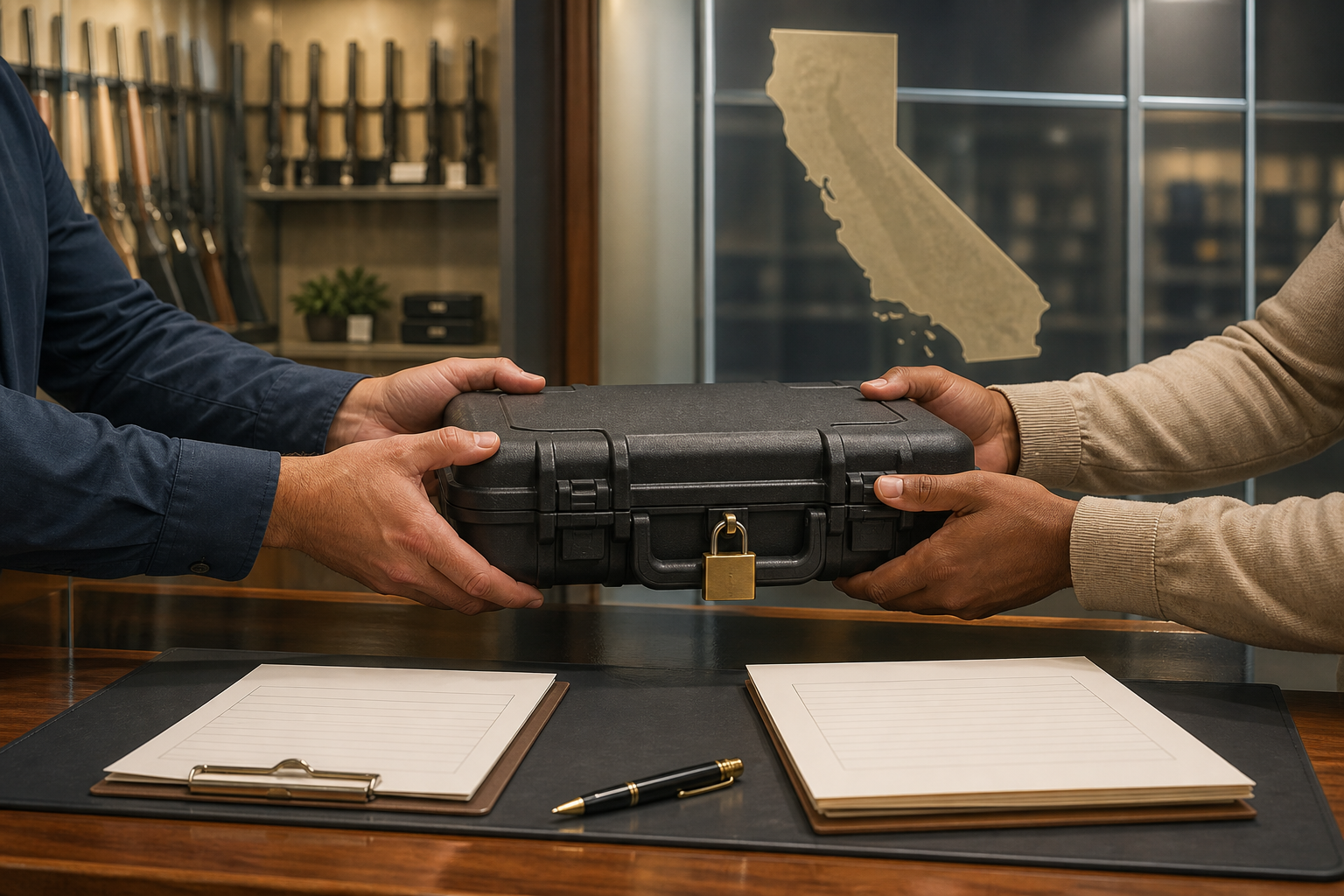
Both parties show up. Bring your IDs; the seller brings the firearm unloaded and cased. The dealer takes possession, and from that moment the transaction is inside the legal system where it belongs.
The PPT superpower: off-roster handguns
California’s “not unsafe” handgun roster restricts which handguns dealers may sell new — but the roster does not apply to Private Party Transfers. This is why the classifieds are full of modern handguns you can’t buy at a gun counter: a PPT is the lawful way for an ordinary Californian to acquire an off-roster pistol from another Californian. It’s also why used off-roster guns carry a premium. Know the market value before you buy or sell.
The exemptions worth knowing
Intra-familial transfers. Transfers between parent and child, or grandparent and grandchild, skip the dealer — but not the paperwork. The recipient reports the transfer to DOJ through CFARS within 30 days, and needs an FSC for handguns. Gifts between siblings, cousins, or friends do not qualify — those are PPTs.
C&R long guns. Curio and relic rifles and shotguns (generally 50+ years old) are exempt from the dealer requirement in private transactions — a cornerstone of California collecting.
Inheritance and operation of law follow their own reporting paths through CFARS. When in doubt about whether your situation is exempt, assume it isn’t and ask a dealer — a $50 PPT is the cheapest legal insurance in the firearms world.
A note on parts: as of January 1, 2026, AB 1263 pulls firearm barrels and certain precursor parts into the regulated world too — vendor transactions, ID verification, and (from July 1, 2026) background checks for barrels. Private deals for covered parts are no longer the informal matter they once were; check current DOJ guidance before selling parts alongside a firearm.
Doing the deal safely
The legal process protects both sides — a completed PPT means the buyer passed a background check and the seller’s liability trail ends cleanly. The human process is where people get burned, so borrow the classifieds veterans’ rules: deal in person, at the dealer, and be wary of any pressure to send electronic payment (Zelle, Venmo) to a stranger before you’ve met. Check the seller’s or buyer’s forum account age and reputation. Cash or verified payment at the FFL counter, firearm inspected before the DROS is started, and everything about the deal in writing in the listing thread. If something feels off, the beauty of the PPT system is that you can simply walk away — nothing is final until the dealer’s paperwork starts.
The bottom line
PPTs are cheap, safe, and — thanks to the roster exemption — often the best acquisition path in California. Learn the process once and the used market opens up to you. For the full curriculum, our Private Party Transfers course walks every step with checklists for both buyer and seller.
Sources: CA DOJ Bureau of Firearms • AB 1263 bill text • AB 1263 dealer guidance
This article is educational content from CAGUNS Resource Hub and is not legal advice. Consult a qualified attorney about your specific situation.
What the Community Is Saying
Private party transfers generate more practical questions on CAguns than almost any other topic, and the long-running off-roster thread has accumulated the kind of detail that only comes from people who have actually stood at the counter.
The off-roster rule, stated plainly
The clearest formulation in the thread: roster status only comes into play for a new, unsold handgun. That is why the PPT is the legal channel for off-roster guns. Members also settle a related confusion — how a firearm was originally acquired, whether by inheritance, an intrafamilial transfer, or a move into California, is independent of your ability to transfer it onward by PPT.
How the handoff actually runs, and it varies
It is two separate transactions: the dealer runs the DROS, the money moves between the parties. Members do that second part differently — some meet at the shop, inspect the gun in the seller's trunk, and hand over cash before walking in; others complete the paperwork first and send payment electronically afterward. Both parties need valid California ID. The consistent warning is against leaving a deposit with a seller who has no established feedback.
The disagreement worth knowing before you buy
One member argues that an off-roster gun which crossed state lines without a dealer-to-dealer transfer can expose the holder to illegal importation exposure even though the PPT itself passes without incident. Others dispute how real that risk is. What both sides agree on is the part that should concern a buyer: a PPT will clear even when the firearm has no California record behind it, and the buyer has no way to verify that in advance.
Pick the dealer deliberately
Repeated advice: use dealers who specialize in transfers rather than large chain stores, and specifically look for one who will release on an “Undetermined” status rather than leaving you in an open-ended hold. Members also flag an edge case worth knowing — transferring certain components rather than a complete firearm can trigger a safe handling demonstration problem, which dealers sometimes solve by substituting their own demo gun.
Five pages of replies · CAguns.net
Question about buying off roster gun from private party transfer
Done a PPT recently? Post the dealer's fee and how long the shop actually took.
The Docket, by email
Skip the forums. Get the change and the statute behind it.
A bill passes, a case turns, the roster changes. No weekly filler, no sales. Unsubscribe in one click.
Only when something changes. Your address is never shared.